Tuesday, February 21, 2012

Ode to the "short month"... Otherwise called Black History Month

Pleasantville-My Home-The Place I Knew


It’s funny how my father always called this “the short month”:  Not February, or Black History Month... the short month.  It was a standard joke.  February was his busiest month because EVERYBODY needed someone to speak for their “Black History Month Programs”.  By March 1, he was always exhausted.  After some time he just started saying: “No thanks.”  Well, I’ve had a lot of “No thanks” moments this month.  Mostly about moments in MY history which I don’t care to memorialize in a Hallelujah kind of way, or relegate to a sale week or a time set aside to “think” about what was, in a place where I was.
For me, history is of no value unless you do something with or about it.  You can count me out of the “short month” if our lives are not a CONSTANT struggle to figure out how to live and grow in community and evolve into the fullest of human beings God intended.  
I grew up in the small town of Pleasantville. I could/would walk it.  From one end near the mental hospital to the far end where the pool was concreted in so “coloreds” couldn’t swim there.  As a real young kid my community was quite smaller and everyone watched.  It’s funny that no one needed special training.  We all just watched out for each other. 
I remember a hurried breakfast on school days and running around the corner to school--Park Avenue School.  A short walk down the street, around the curve in the corner, past my grandparent’s home a few doors down, a left hand turn and a couple yards down the street.
Birthdays were special because it was also my grandfather’s birthday.  He was always on the porch that morning.  He’d greet me with a “Happy Birthday, girl” and I’d always say the same thing: “Same to you.” 
I come from a family of teachers.  My grandfather taught 6th grade at Park Avenue School, as did his neighbor Eliza Mack and my brother’s godmother Marianna Hunter.  It was a safe place for me...  and most I suppose.  But that’s not a part of this story except that Park Avenue School is no longer standing.  For the most part, it’s an empty lot.
On Saturday morning, breakfast was always special.  I could walk out the back door, through the back yard, and down the dirt road to Mr. Brownridge’s Fish store.  He’d be back from fishing by 8 or 9 AM.  I can even remember what we usually got:  Spots, porgies, whitings, head’s off and split.  And of course some conversation that always started off with a question about school.  By the way, that dirt road is still a dirt road but Mr Brownridge, nor his store, are there anymore.  It runs a paved bike path, too often littered with broken glass.
I grew up in a community where I could go out my back door, cross the railroad tracks and walk two blocks to a local library.  It was one room, filled with heavily handled books.  There was one large table and quite a few chairs.  I never knew, ‘til I was quite older, that there were only children’s books and young adult books there and that the Library was her home.  All I knew was there were tons of books that I could take home and bring back the next week.  And I did.  I grew up in a community where the constant message that I heard EVERYDAY from EVERYONE was:  “If you can learn to read, you can do ANYTHING.”  But, that’s not why I learned to read.  I learned to read because I was a dreamer with a huge imagination.  I learned to read because books would transport me to another time and another place.  I learned to read because I loved the pictures it helped me to create about unimaginable tales and live them out in my mind. That library is no longer there, nor is the house, and I can’t remember “my librarian’s” name.
I grew up in a community, in a church that consisted of one large room (the sanctuary), a bathroom and a kitchen.  For celebrations that required “feasts”, the sanctuary became the dining hall.  For children’s pagents and plays:  it became a theatre.  For important discussions:  it became the town hall.  We kids were always there, packed shoulder to shoulder, licking our lips and listening to grown folks.  I listened to grown folks talk about the challenges of the day, debate the solutions and organize to solve the problems.  Whether the issues were about schools, or parks and recreation or how to get together to build on addition to the building, we were there.  And on Saturday afternoon, when the men came together to build on that addition, we were there.  That’s how we learned.
So what is my point.  My point is they aren’t there.  Our children are not there and neither are we.  Many in our communities work too hard away from our homes and the responsibility to parent and build community has been left to the street.  There’s no income for nannies, (sometimes no nanny), we don’t know our neighbors and are afraid to do anything but mind our business.  We haven’t learned that we need to fix this particular issue somehow, and not with an i-Whatever, x-Whatever, or the newest PS- Something.  That’s not to say that the world of electronics and it’s importance in building the world and our minds has no place.  Our “gadgets/tools” are not the enemy, and in many cases they are not even a luxury, but we need to define how and when they are used and useful, or they will define us.
Bigger isn’t always better, nor is faster.  WHAT WORKS?  Not what works next door or in the next town.  WHAT WORKS HERE?  What is it that we know about the past that we can use to inform the future?  How do people learn to create, learn and live together in community?


Monday, February 20, 2012

Historical Blindspots and Amnesia...

On February 9, 1942 Executive Order 9066 was issued by the United States government calling  for the interment of all American citizens of Japanese origin.  And although this is the short month, "Black History Month" it's still worth noting and recalling to our attention as a tragic day in American History that should never be repeated.  This video is still available on WHYY for viewing.  The documentary can be viewed by clicking the link above.

From the introduction to this documentary:
The order set into motion the exclusion from certain areas, and the evacuation and mass incarceration of 120,000 persons of Japanese ancestry living on the West Coast, most of whom were U.S. citizens or legal permanent resident aliens.
These Japanese Americans, half of whom were children, were incarcerated for up to 4 years, without due process of law or any factual basis, in bleak, remote camps surrounded by barbed wire and armed guards.
They were forced to evacuate their homes and leave their jobs; in some cases family members were separated and put into different camps. President Roosevelt himself called the 10 facilities "concentration camps."
Some Japanese Americans died in the camps due to inadequate medical care and the emotional stresses they encountered. Several were killed by military guards posted for allegedly resisting orders.
At the time, Executive Order 9066 was justified as a "military necessity" to protect against domestic espionage and sabotage. However, it was later documented that "our government had in its possession proof that not one Japanese American, citizen or not, had engaged in espionage, not one had committed any act of sabotage." (Michi Weglyn, 1976).

Tuesday, February 7, 2012

Again... Yes Again, and Again and Again!!

I'm having a hard time moving away from the story '68 Olympics this year.  It continues to resonate in my heart and travels deeply into my soul.  Maybe it's the recent publication of The John Carlos Story, his book written with Dave Zirin.  The great respect I have for all of these men.
Order Here

Maybe it's because it was also my time in history.  I was a sophomore in college at the time.


Maybe it's because it allows me some kind of molecular connection that I can maintain to G. Larry James, "the mighty burner" himself a '68 Olympian.  A man so dear, a  friend with a heart of pure gold, whose song was song all to softly, and who left us all too soon.


I remember the 40th Anniversary, the return to Mexico.


The celebrations, the honors, the "redemption".


But today I relearned a very important lesson.  We cannot be one story people. It destroys the human experience. It denies our growth. It makes us less than complete. The rest of that lesson: we are not the author's of the stories of others.  Our job is to listen, with an open and willing heart. To hear the truth from another perspective, to honor it as another's truth and allow it to come into our hearts. And it is an honor to hear the story from the author of the life. It is a responsibility to "pass it on" with the honesty and integrity with which it is told.

My last "again"... on the '68 Olympics is that there were 3 men who stood on that podium that day.  One who is too often forgotten, but one whose image though muted is as strong as any other.  There were three men.  John Carlos, Tommie Smith and Peter Norman;


Monday, February 6, 2012

Before Maxwell C., there was C. Maxwell


My grandfather, a man of his times:

My father would dramatically describe his grandfather's visit something like this:  "Helen (my grandmother, wife of his son Robert Wesley), get a pen and some paper.  I need for you to take this down."  He would then walk around the living room dictating his thoughts and have her read them back.


CORNELIUS M. MANNING
AMONG the older leaders of the race in the South in both political and religious circles, few have been more active or done more efficient work than Rev. Cornelius Maxwell Manning, of Atlanta.
He is a native of North Carolina, having been born in the historic old town of Edenton, December 8. 1845. His father was Moses W. Manning, a tailor by trade and a minister by profession, who had been born in Canada. His mother. Millie E. Johnson, was a native of Edenton and was of Burmese and African extraction. She was a slave, but her freedom was purchased by her husband, together with that of their oldest son. While Dr. Manning was still- an infant the family moved to Philadelphia and later to New York. He was educated, therefore, in the Institute for Colored Youths in Philadelphia and completed his literary course at Lincoln University, in 1872. He
made his financial way through school by working as cook at Northern Summer resorts. Years later, 1900, Morris Brown College conferred upon him the degree of D. D.
In 1867, which was the year of his conversion, Dr. Manning began teaching at Hertford, N. C., and in 1868 was elected delegate from Perquimans county to the new State Constitutional and nominating conventions. The same year he returned to the old home, Edenton, and founded there French Academy, an institution which is still running as Edenton Normal and Industrial Institute.
Having felt called to the ministry, he began his work as a preacher of the A. M. E. Z. church at Big Wesley chapel in Philadelphia in 1874, was ordained a deacon in 1878, an elder in 1879 and elected delegate to the General Conferences in 1880, 1892, 1896 and 1900. Meantime, in 1881, he had joined the A. M. E. church under Bishop Dickerson at Augusta, Ga., and was assigned to Savannah for two years, Newnan one year, Cartersville one year, Acworth two years, Lexington three years, Palmetto two years, Madison one year and Washington one year. This latter service brings his career up to 1896, in which year under appointment of President Cleveland, he went to Liberia as Secretary to the U. S. Legation at that point. He utilized this opportunity to do all the good possible, working as a missionary of the A. M. E. church. He pastored a church up St. Paul's River one year, and the second year of his stay pastored at Monrovia and assisted the church in building a house of worship there. After his return he served as Professor of Homiletics and Sacred History at Turner Theological Seminary eight years.
In 1914 Dr. Manning was appointed to the Athens station which is regarded as having one of the most cultured congregations in the connection. In 1915 he was elected to the General Conference.
Dr. Manning's activities, however, have not been confined solely to the work of the church, but he has taken an active part in the movements which had to do with the progress and development of his race. Admirably fitted by training and experience as a leader, he has been recognized by both races and frequently placed in positions of honor and trust. In 1884 he was appointed Commissioner to the New Orleans Exposition, and his appointment to Liberia has been briefly described.
He saw military service during the war as a member of Company K, Thirty-Fifth U. S. Infantry, from '63 to '66. With his command he took part in the bombardment and final capture of Fort Wagner, was in the engagements of Olustee, Honey Hill (or Pocotalligo) and was not mustered out of the service until nearly a year after the close of the war.
In 1868 he was married to Miss Elizabeth A. Hathaway of Edenton, N. C. She bore him two children, Chas. C., deceased, and Anna (i. (now Mrs-. Todd). Subsequent to his first wife's death, he again married, in 1884, Mrs. Mary A. (Wesley) Thomas, a daughter of David and Elizabeth Wesley, of Augusta. Of the four children born of this union two survive—Lorenzo D. C. and Robert W. Manning.
Dr. Manning is a Thirty-Third Degree Mason, and is also prominently identified with the Odd Fellows. His intellectual calibre may be inferred from the lines of reading he has found most helpful. They are: History, sacred and profane; philosophy and poetry, especially the English classics, such as Shakespeare, Milton and Tennyson. While he has not himself been a prolific writer, he has occasionally contributed to church papers, and some years ago prepared a booklet entitled "Is God Knowable?" He also wrote a hymn. "Creative Week," which has found a permanent place in the hymnal of his denomination.
Out of a long experience, he would advise young men not to divide their energies in this day of specialties by trying to master too many things, but to seek to be proficient in some chosen line of work or profession. He considers the questions of immigration and temperance among the most important with which we have to deal as a nation. He has given careful thought to our social and economic conditions, and believes that the best interests of Georgia may be served, not by a policy of repression, but by a policy which would give larger opportunities, which would inspire hope. With this in view, he would like to see better wages, bettor school facilities, better quarters in the country, and a penal system which would undertake to reform. rather than punish the criminal. To this end, he advocates the abolition of stockade sentences, shackles and stripes, as well as corporal punishment.
Msource: Excerpt from:   ‪History of the American Negro and his institutions ...‬ edited by Arthur Bunyan Caldwell

Tuesday, January 31, 2012

Ethics and Sports

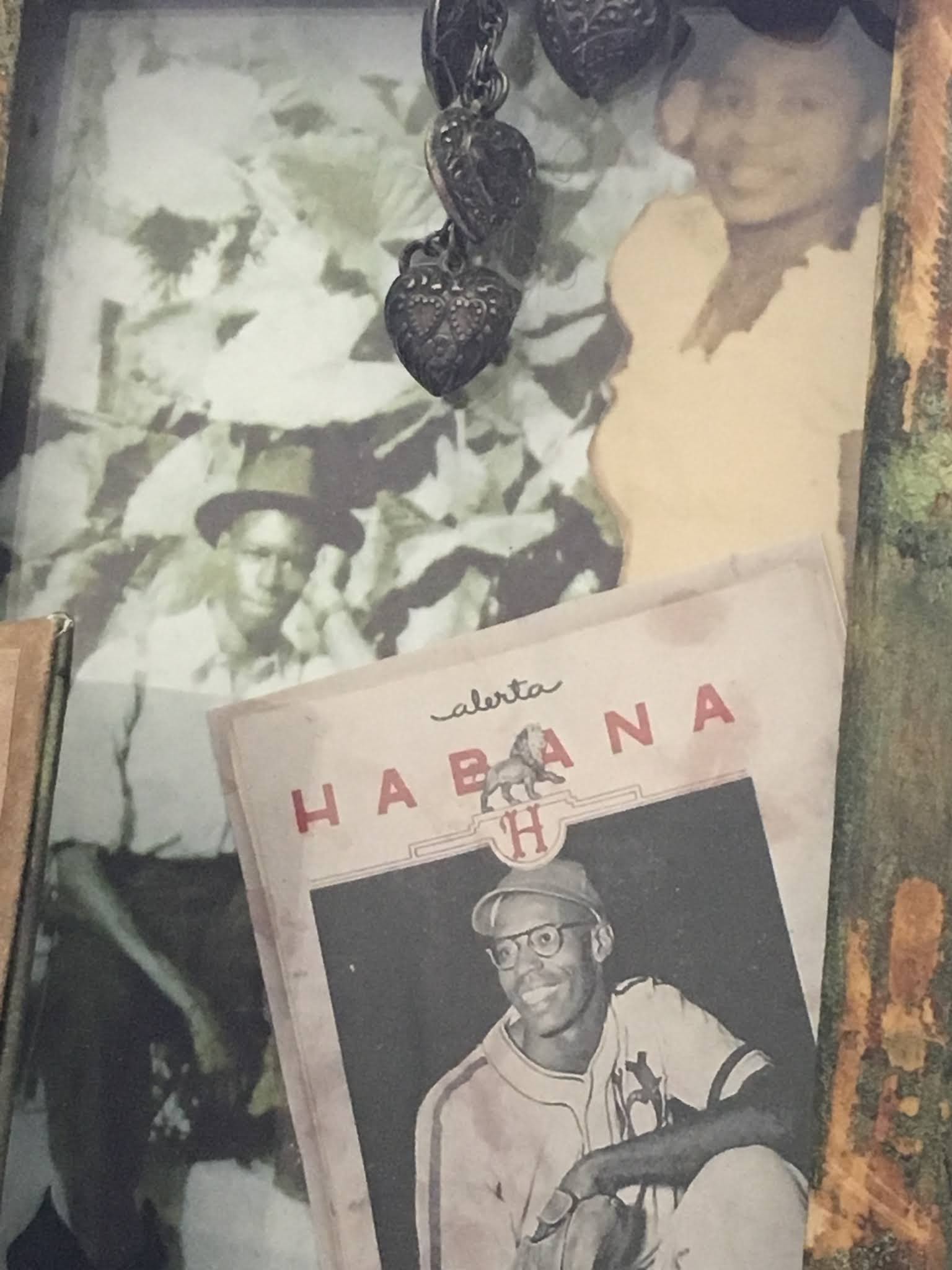
I suppose for the most part we could call this an oxymoron.  A painful one.  I find the arena of the athlete, no matter the country more and more difficult to watch. I find myself lost in cynicism.  I can remember my father's final days still being able to lie in the bed and enjoy a good baseball game.  I didn't get it.  But what I know now is that those games were being played out in a different part of his mind and his body.  There was actually a process of displacement.  Every throw of the ball and every crack of the bat triggered a memory that displaced the one on the screen and replaced it with a young, long lean athlete. One, who took to the fields at another time in this country where segregation was the rule of law; and yet they played THEIR game.  And one that gathered them and their families together to follow the sun to countries of Latin America to play winter ball and be hailed as heroes.

But I don't want to dwell on the seedy side of sport. I want to elevate the heroes. Those that allow us to speak of the nobility of the athlete and the contribution that he/she has made on and off the field. Those who make my heart jump and bring me to my feet. Those who have grabbed their moment in time, at great sacrifice, expose the harsh lines that separate us as human beings, and forced us to have to bend our perception of reality, wrestle it to the ground and force it to succumb to truth.  These are the ones that kept me up last night.


Listen to a few words from Anderson, then click on the links below to check out some videos.


Harry Anderson              


John Carlos and Tommie Smith


Howard Norman


Sunday, January 15, 2012

No Easy Answers...


"I refuse to accept the cynical notion that nation after nation must spiral down a militaristic stairway into the hell of thermonuclear destruction. I believe that unarmed truth and unconditional love will have the final word in reality. This is why right temporarily defeated is stronger than evil triumphant. I believe that even amid today's mortar bursts and whining bullets, there is still hope for a brighter tomorrow. I believe that wounded justice, lying prostrate on the blood-flowing streets of our nations, can be lifted from this dust of shame to reign supreme among the children of men."

- Dr. Martin Luther King, Excerpt of Nobel Peace Prize Acceptance Speech, 1964


There are no easy answers. I wish there were.  Children killing children; and children just killing says much more about us than it does about our children.  And, what is it with their parents? Well, many of them are children themselves. Please, don't get me wrong. I too am angered by the growing number of body bags and what appears to be lack of parental attention and oversight of our youth. I too can not understand the cavalier approach to human life that seems to be turning our communities into war zones. Our children have become foot soldiers from the war torn far reaches of Uganda to the short blocks of East Baltimore.  No, I don't understand. I am fortunate enough to be able to say it was not my life.

Some time ago I found the work of artist Tracey Malloy who has done a series called Kids that Kill Kids
I urge you to take a look.


Her work is striking.  However its format provides an entry point for dialogue about this volatile issue.

 Last year, NPR hosted a series focused on understanding the adolescent brain:  Frontline: Inside the Teen Age Brain.   I remember blogging after reading transcript:

...the teen age brain is not fully developed.  And further it appears that that portion which is the slowest to develop is that which governs our ability to make appropriate choices. It's the reason for the constant parental mantras: "What were you thinking?"  It appears that there really is a scientific bases for those stop signs that contained only the words "...because I'm the Mommy that's why!"  Would I have been more compliant/understanding if I knew that I couldn't always trust my judgement because I wasn't functioning with a full deck?  I think I would. I think it would have also assisted my daughter understanding why I parented in the way I did. Heck, it would have helped me understand.  But generally, as a parent, it was more about operating from my gut and my historical "learned" behaviors and observations.  That there was a physiological reason for me to not abdicate responsibility for decision making to my teenager never crossed my mind.  Who knew?

And recently, I read an article by New York Times op-ed columnist Nicolas Kristof which begins

"PERHAPS the most widespread peril children face isn’t guns, swimming pools or speeding cars. Rather, scientists are suggesting that it may be “toxic stress” early in life, or even before birth."

This article focuses on a recent policy statement issued by the American Academy of Pediatrics. That policy statement: Early Childhood Adversity, Toxic Stress, and the Role of the Pediatrician: Translating Developmental Science Into Lifelong Health
This statement provides additional insite gained from 20 years of research by scientific scholars. The initial challenge: Do we believe it? The second: How do we use it to develop sound policy based on scientific research? The third: Do we REALLY want to?

Monday, January 9, 2012

Thank You Kristian Anderson

Kristian Anderson passed on January 2, 2012.  I've learned a great deal from him.  Sometime ago I posted a YouTube video tribute he made for his wife.  Periodically, I would return to it just for a smile.  It's a most beautiful love story in one four minute video.  This is it:


Rachel's Birthday Letter - Hi-res from Kristian Anderson on Vimeo.


I've followed Kristian and Rachel's journey from then on via his blog "there's a crack in everything".  He fought to stay here, but was always ready to go.  When I read "The Final Call", his final words posted by his wife Rachel, my heart broke.  He wrote:

"How the light gets in. 
As I mentioned at the start of this journey it’s a Leonard Cohen lyric. The truth being we’re all broken, we’re all cracked and what so many people see as a fault or a malfunction really is something to be considered useful.  I’m not sure how much longer I have left but it appears that the physical and medical signs are all pointing to my end.
And, what a great time to go, right at Christmas-time. 
Just wonderful."

And, in that moment I got it.  One of those "aha" moments when you know that you know.  So, I let that crack be, and I let the light in.


I was surprised how bright it was and how it illuminated the cracks in me that I work hard to conceal and a great deal of time and energy to maintain:  with the "silly putty" that I used to play with as a child; with the plaster that was beginning to crumble; and for the real tough stuff, the concreate and welds.  What I learned about all these barriers and shields is that they block the light.  Any inability to allow me to be vulnerable denies my access to learning and strength .   What I think makes me feel safe and comfortable takes away my ability to BE!

I decided to take out my chisel.  I'm going after the big stuff first.  The cracks that really look like caverns.  I know that is where the biggest learning is, because they are the ones that scare me the most.

I found this rendition of Leonard Cohen's "Anthem".  I'm partial to this interpretation by Jill Christensen and Perla Batalla.  I love that Perla sings with her whole being.  Watching her as she interprets a song is a pretty awesome experience.  Jill Christensen is no slouch either.  They are really pure light.


PURE LIGHT.  Thank You, Kristian Anderson.